
Responsible gambling — limits, breaks, and AU support
VegasNow's in-app limits, self-exclusion tools, and independent AU support lines for safer play.
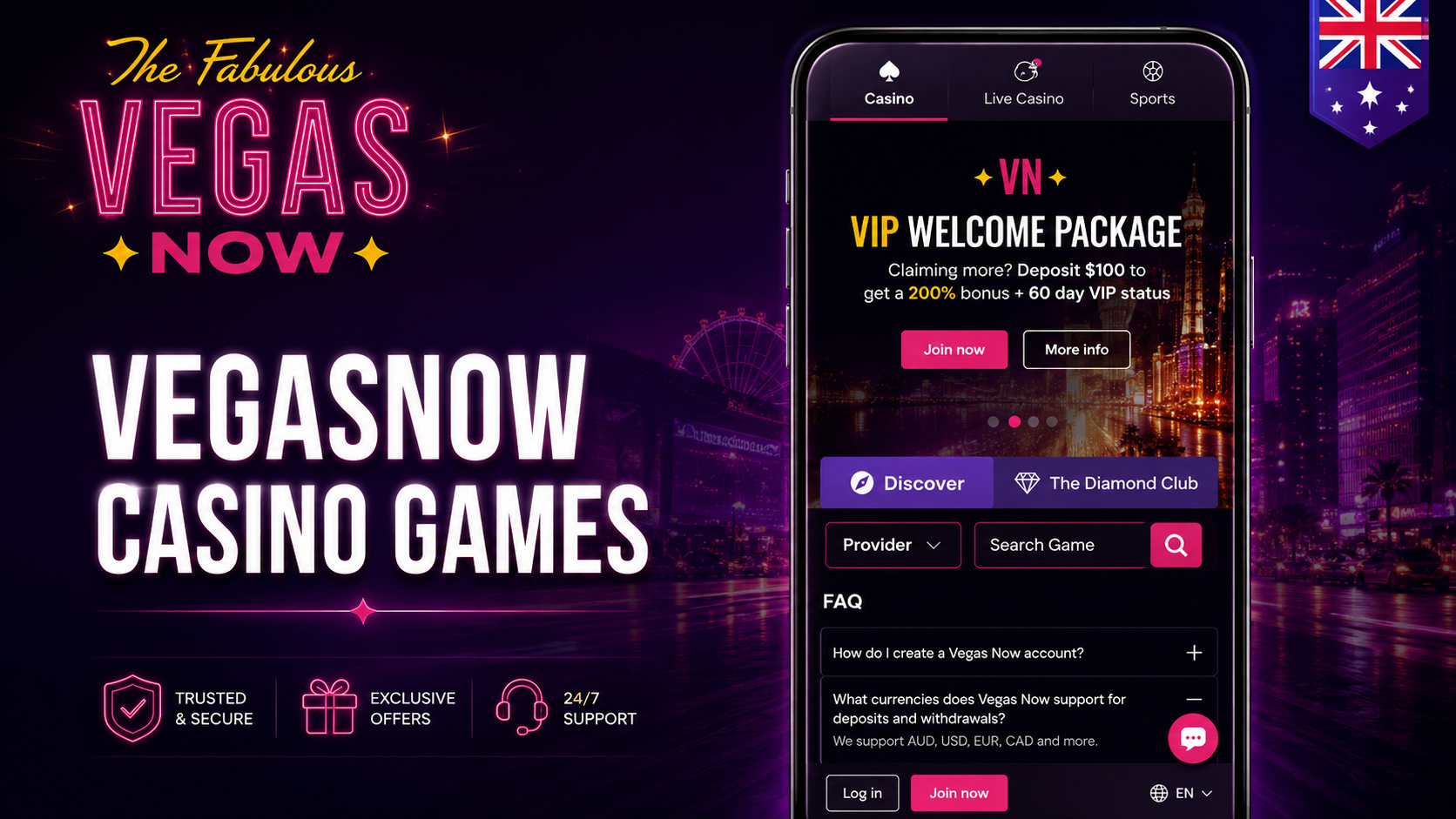
VegasNow launched in 2023 with a Vegas-themed UX and an active tournament calendar, but the platform also embeds a set of responsible gambling tools designed to help AU players stay in control. This page walks through the deposit limits, time-out periods, and self-exclusion options available in your account settings, then lists the independent AU support services — Gambling Help Online, Lifeline, MoneySmart — that sit outside the operator's control.
Responsible gambling isn't an opt-in feature; it's the baseline expectation. The tools covered here are mandatory under Curaçao licensing terms and mirror the harm-minimisation frameworks in most jurisdictions. VegasNow's implementation is functional rather than innovative — the limit-setting interface sits in the cashier, time-outs are accessible from the account menu, and permanent exclusion is a two-step email request. The system works, but it's not as polished as the platform's animated Vegas visuals suggest.
This guide is written for AU players who want to understand what's available before they need it. The tone is practical, not promotional. If you recognise problem gambling patterns in your own behaviour, the AU support section at the end of this page lists the direct-dial helplines and free counselling services that operate independently of any casino.
In-app tools: deposit limits, loss caps, and session reminders
VegasNow's responsible gambling toolkit is accessed via the account settings dropdown in the top-right corner of the desktop interface, or under "My Account → Limits" on mobile. The platform offers three core controls: deposit limits, loss limits, and session time reminders.
Deposit limits are set per 24-hour, 7-day, or 30-day period. You nominate the ceiling in A$, and the system blocks any transaction that would push you over the threshold within the chosen window. Example: a A$500 weekly limit will reject a A$200 deposit on day six if you've already deposited A$400. Changes to deposit limits take effect immediately for reductions; increases require a 24-hour cooling-off period and an email confirmation click. The A$30 minimum deposit still applies — you can't set a limit below that floor.
Loss limits work the same way but track net losses (deposits minus withdrawals and bonus forfeitures) rather than deposit volume. VegasNow's loss-limit logic includes bonus balance in the calculation, so wagering through a reload counts toward your loss cap. This is stricter than some peers, where bonus play is excluded from loss tracking. The 24-hour cooling-off rule applies to increases here as well.
Session reminders are pop-up notifications triggered after a set duration — 30, 60, 90, or 120 minutes. The reminder shows elapsed time and net session balance (up or down), then offers three buttons: continue, take a break, or log out. The pop-up doesn't force a logout; it's a nudge rather than a hard stop. This is the least robust of the three tools — players who are chasing losses will click "continue" reflexively — but it meets the baseline requirement for session-duration awareness.
Time-outs and self-exclusion: 24-hour breaks to permanent closure
VegasNow offers two escalation steps beyond daily limits: temporary time-outs and permanent self-exclusion.
Time-outs (also called "cool-off periods") lock your account for 24 hours, 7 days, or 30 days. During the time-out, you cannot log in, deposit, or access the cashier. Bonuses and tournament entries remain frozen until the account reopens. Time-outs are activated in the account settings menu under "Responsible Gambling → Take a Break." The clock starts immediately; there's no undo button. VegasNow sends a confirmation email with the reactivation date in AEST. At the end of the period, the account unlocks automatically — you don't need to contact support unless you want to extend the time-out or convert it to a longer exclusion.
One operational note: active bonus balances are forfeited if you activate a time-out mid-wager. This is consistent with industry practice (bonuses expire on account suspension), but it's not always obvious in the UI. If you're halfway through a 40× rollover and you hit "Take a Break," the bonus credit and any associated free-spin winnings are voided when the account locks.
Permanent self-exclusion is the nuclear option. It's a lifetime ban from the VegasNow platform and all sister sites under the same operator. Self-exclusion requests must be submitted via email to support@vegasnowgoau.com with the subject line "Self-Exclusion Request." The support team replies within 24 hours to confirm the closure date and request ID verification (passport or driver's licence photo). Once processed, the account is closed, all pending withdrawals are expedited, and the email address and device fingerprint are blacklisted from re-registration. VegasNow does not offer account reopening after self-exclusion — this is a permanent measure.
The process is manual rather than instant, which is a friction point. Some AU-licensed operators now offer one-click self-exclusion with immediate effect; VegasNow's email-and-review workflow introduces a 24–48 hour delay. That window can be problematic for players in crisis. If you need an immediate account freeze while waiting for the self-exclusion confirmation, contact live chat and request a manual suspension as an interim measure.
Independent AU support: Gambling Help Online, Lifeline, and MoneySmart
The tools inside VegasNow's account settings are operator-controlled. The resources listed below are independent of any casino and exist to provide free, confidential support to AU residents experiencing gambling harm.
Gambling Help Online is the Commonwealth-funded national helpline operated by Relationships Australia. The service is available 24/7 via phone (1800 858 858) or live chat at gamblinghelponline.org.au. Counsellors offer crisis intervention, referrals to face-to-face services, and structured brief therapy (3–6 sessions). The helpline is free from landlines and mobiles, and the chat interface does not log IP addresses. Gambling Help Online also maintains a directory of local support groups and financial counsellors in each state and territory.
Lifeline Australia (13 11 14) is a general crisis support line staffed by trained volunteers. While not gambling-specific, Lifeline counsellors are briefed on gambling harm as part of their training curriculum and can provide immediate emotional support or escalate to Gambling Help Online if the caller needs specialist intervention. Lifeline's chat service (lifeline.org.au) is text-only and operates 24/7.
MoneySmart (moneysmart.gov.au) is ASIC's financial literacy hub. The gambling section includes budget calculators, debt management guides, and case studies of financial recovery pathways. MoneySmart doesn't offer counselling, but the budgeting tools are practical for players trying to quantify and reverse gambling-related debt. The site also links to the National Debt Helpline (1800 007 007), which provides free financial counselling to Australians in hardship.
BeGambleAware AU is a harm-reduction campaign rather than a direct-service provider, but the website (begambleaware.org) aggregates state-by-state resources and hosts the "Gambling Harm Self-Test," a 10-question diagnostic tool adapted from the Problem Gambling Severity Index. The test is anonymous and generates a risk score (low / moderate / high) with tailored next-step recommendations.
Recognising problem gambling: warning signs and self-assessment
Problem gambling is defined by loss of control over gambling behaviour, not by the dollar amount lost. The Australian Gambling Research Centre's diagnostic framework lists nine warning signs; three or more in a 12-month period suggest a gambling disorder.
The nine signs are: (1) Preoccupation — gambling is the dominant thought between sessions. (2) Tolerance — needing to bet larger amounts to achieve the same emotional response. (3) Withdrawal — irritability or restlessness when attempting to cut back. (4) Loss-chasing — returning the next day (or hour) to recoup losses. (5) Lying about the extent of gambling to family or friends. (6) Jeopardising relationships, employment, or study opportunities due to gambling. (7) Relying on others to cover gambling-related debts. (8) Repeated failed attempts to stop or reduce gambling. (9) Gambling as an escape from anxiety, depression, or other emotional distress.
If three or more apply to you, contact Gambling Help Online (1800 858 858) for a confidential assessment. Early intervention improves outcomes — the average time between first recognition of a problem and first contact with a support service is 9–12 months in AU data, and that delay correlates with deeper financial harm.
Self-assessment tools: VegasNow does not host an in-app self-test (unlike some AU-licensed operators), but the platform's footer links to begambleaware.org, which hosts the Gambling Harm Self-Test mentioned earlier. The test takes 3–4 minutes and generates a risk score with referral pathways. For a more formal assessment, Gambling Help Online counsellors can administer the full Problem Gambling Severity Index (PGSI) during the first phone session.
18+ policy and AU compliance notes
VegasNow operates under a Curaçao eGaming licence, which requires age verification at the point of first withdrawal. The platform's terms prohibit registration by persons under 18, and the KYC process — mandatory before any payout — includes government-issued photo ID that confirms date of birth. In practice, this means an underage player could deposit and wager, but would be blocked at withdrawal and forfeit any winnings.
AU law prohibits operators from offering gambling services to minors, and VegasNow's terms state that accounts opened by persons under 18 will be closed immediately upon discovery, with balances forfeited. The platform does not use age-estimation technology (facial recognition or device fingerprinting) at the registration stage — the only hard check is the KYC ID upload.
Parents and guardians concerned about underage access should use device-level controls: iOS Screen Time, Android Digital Wellbeing, or router-level DNS filtering (OpenDNS, CleanBrowsing) can block casino domains at the network layer. VegasNow does not offer a "parent portal" or parental notification system; responsibility for preventing underage access rests with the account holder and the household.
Responsible advertising pledge: VegasNow's marketing emails (sent to opted-in subscribers) do not use language that trivialises gambling harm, guarantees wins, or targets financial distress. Promotional imagery avoids depicting minors, and the footer of every email includes a "Manage Limits" link to the account settings page. These practices align with the Australian Communications and Media Authority's voluntary code for gambling advertising, though enforcement under a Curaçao licence is lighter than under an AU state regulator.
Frequently asked questions
-
How do I set a deposit limit at VegasNow?
Go to account settings, select "Responsible Gambling → Deposit Limits," then choose a 24-hour, 7-day, or 30-day cap in A$. Reductions apply immediately; increases require a 24-hour cooling-off period and email confirmation.
-
What happens to my bonus balance if I activate a time-out?
Active bonus credit and any associated free-spin winnings are forfeited when the account locks. Completed wagering (bonus already converted to real balance) is unaffected.
-
Can I reopen my account after self-exclusion at VegasNow?
No. Permanent self-exclusion is a lifetime ban from VegasNow and all sister sites. The email address and device fingerprint are blacklisted from re-registration.
-
Is Gambling Help Online free to call from a mobile?
Yes. The 1800 858 858 helpline is free from Australian landlines and mobiles. The live chat service at gamblinghelponline.org.au is also free and does not log IP addresses.
-
Does VegasNow block underage players at registration?
No. Age verification occurs at the first withdrawal via KYC ID upload. Accounts opened by persons under 18 are closed upon discovery, with balances forfeited. Use device-level parental controls to block access at the household level.